

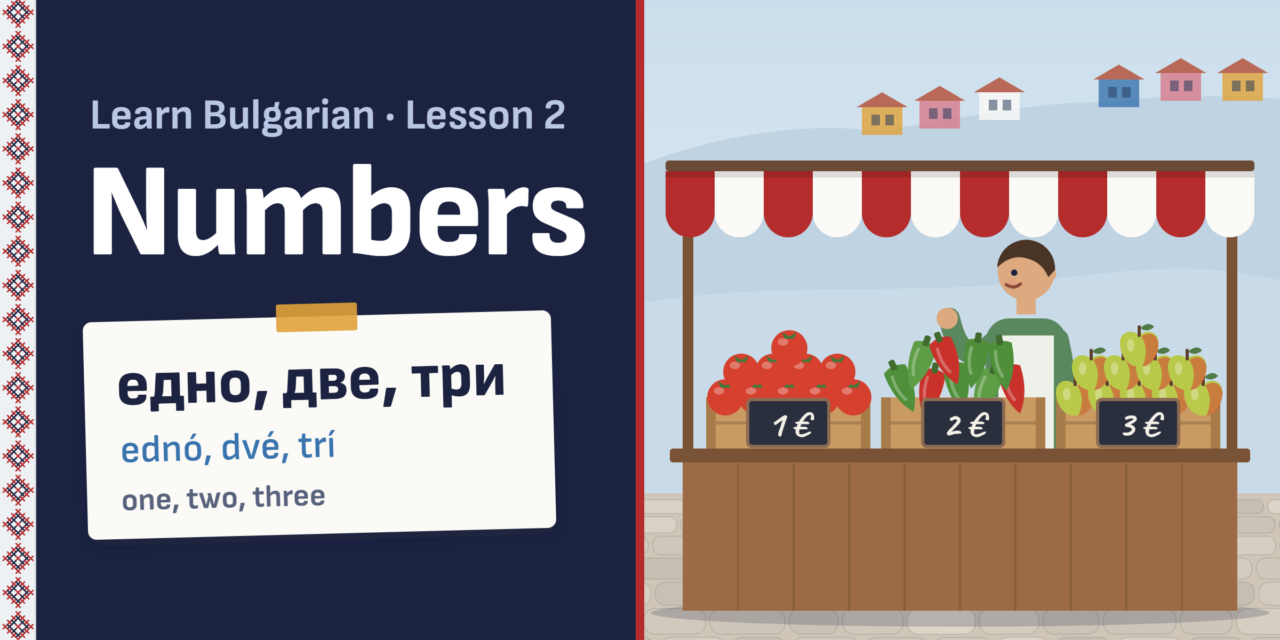
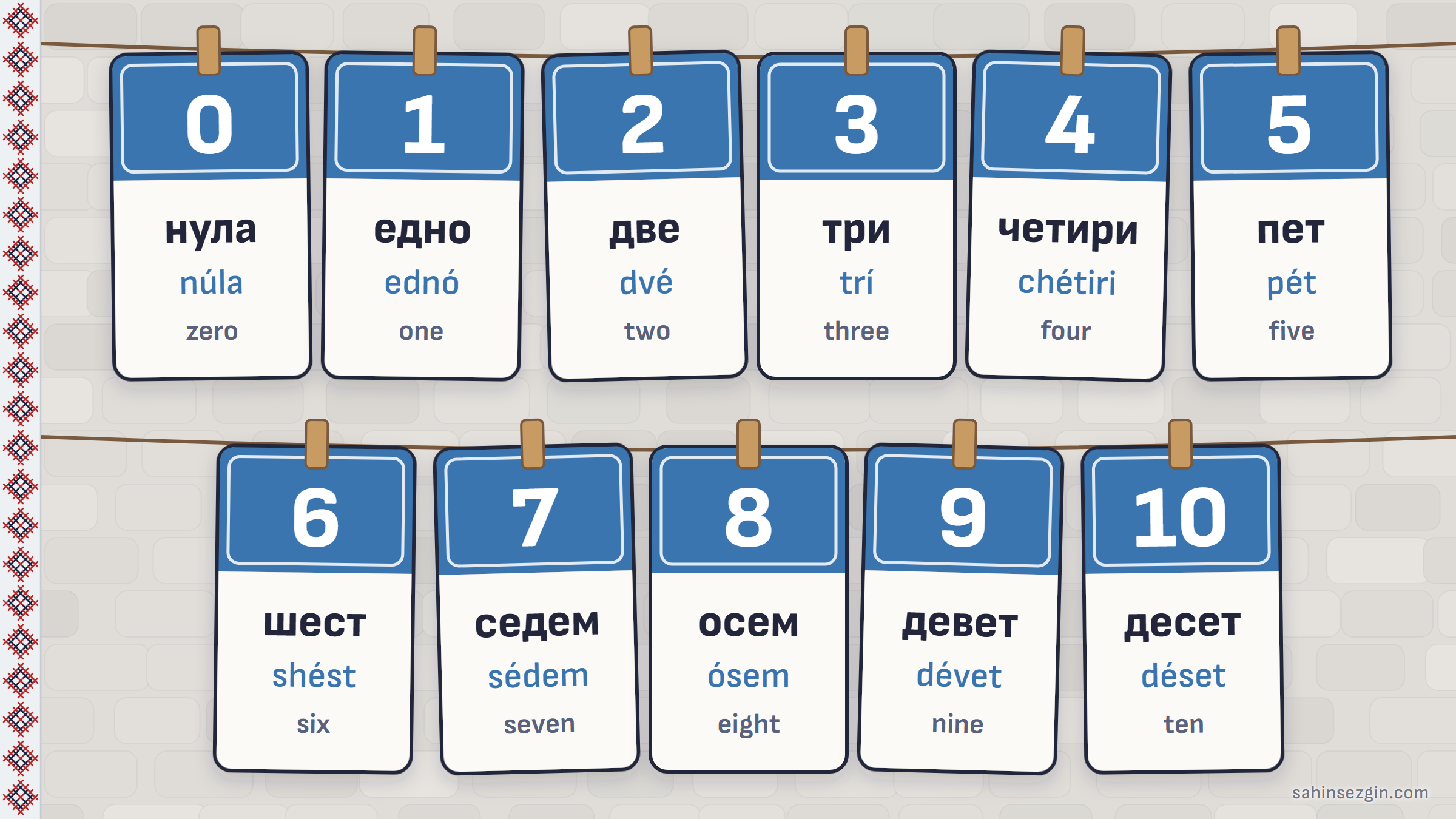
Bulgarian numbers from zero to ten are нула (núla) 0, едно (ednó) 1, две (dvé) 2, три (trí) 3, четири (chétiri) 4, пет (pét) 5, шест (shést) 6, седем (sédem) 7, осем (ósem) 8, девет (dévet) 9 and десет (déset) 10. Once you know these eleven words, a few rules let you count in Bulgarian up to a million.
The accent mark shows the stressed vowel: in chétiri you push the first syllable. If Cyrillic still looks like a code, start with Lesson 1: the Bulgarian alphabet.
PART 1 · ONE TO A HUNDRED
1. Bulgarian numbers 1 to 20: the first ten and the “-teen” pattern
Bulgarian numbers 1 to 10 are short single words; the table below starts at zero.
| Bulgarian | Pronunciation | English |
|---|---|---|
| нула | núla | 0 |
| едно | ednó | 1 |
| две | dvé | 2 |
| три | trí | 3 |
| четири | chétiri | 4 |
| пет | pét | 5 |
| шест | shést | 6 |
| седем | sédem | 7 |
| осем | ósem | 8 |
| девет | dévet | 9 |
| десет | déset | 10 |
Eleven to nineteen follow one pattern: the digit plus -надесет (nádeset). The ending is на (na, on) glued to десет (déset, ten), so единадесет (edinádeset) means “one on ten”. English does nearly the same with “-teen”: thirteen is “three” plus a worn-down “ten”. You see the long form in writing. In speech the ending shrinks to -найсет (náyset), and that short form is what you will hear almost every time.
| Bulgarian (written / spoken) | Pronunciation | English |
|---|---|---|
| единадесет / единайсет | edinádeset / edináyset | 11 |
| дванадесет / дванайсет | dvanádeset / dvanáyset | 12 |
| тринадесет / тринайсет | trinádeset / trináyset | 13 |
| четиринадесет / четиринайсет | chetirinádeset / chetirináyset | 14 |
| петнадесет / петнайсет | petnádeset / petnáyset | 15 |
| шестнадесет / шестнайсет | shesnádeset / shesnáyset | 16 |
| седемнадесет / седемнайсет | sedemnádeset / sedemnáyset | 17 |
| осемнадесет / осемнайсет | osemnádeset / osemnáyset | 18 |
| деветнадесет / деветнайсет | devetnádeset / devetnáyset | 19 |
| двадесет / двайсет | dvádeset / dváyset | 20 |
In 11 to 19 the stress always sits on на (na), never on the digit. In 16 the written т (t) is silent. For 20 the first part is два (dvá, two), not две (dvé).
Look-alike letters: number words are full of Cyrillic letters that look English but sound different: Р (r), Н (n), В (v), С (s), Х (h). So сто (stó, a hundred) is not “cto”, and три (trí, three) has an r in the middle, not a p.
2. How to count in Bulgarian to 100: tens and the word и (i, and)
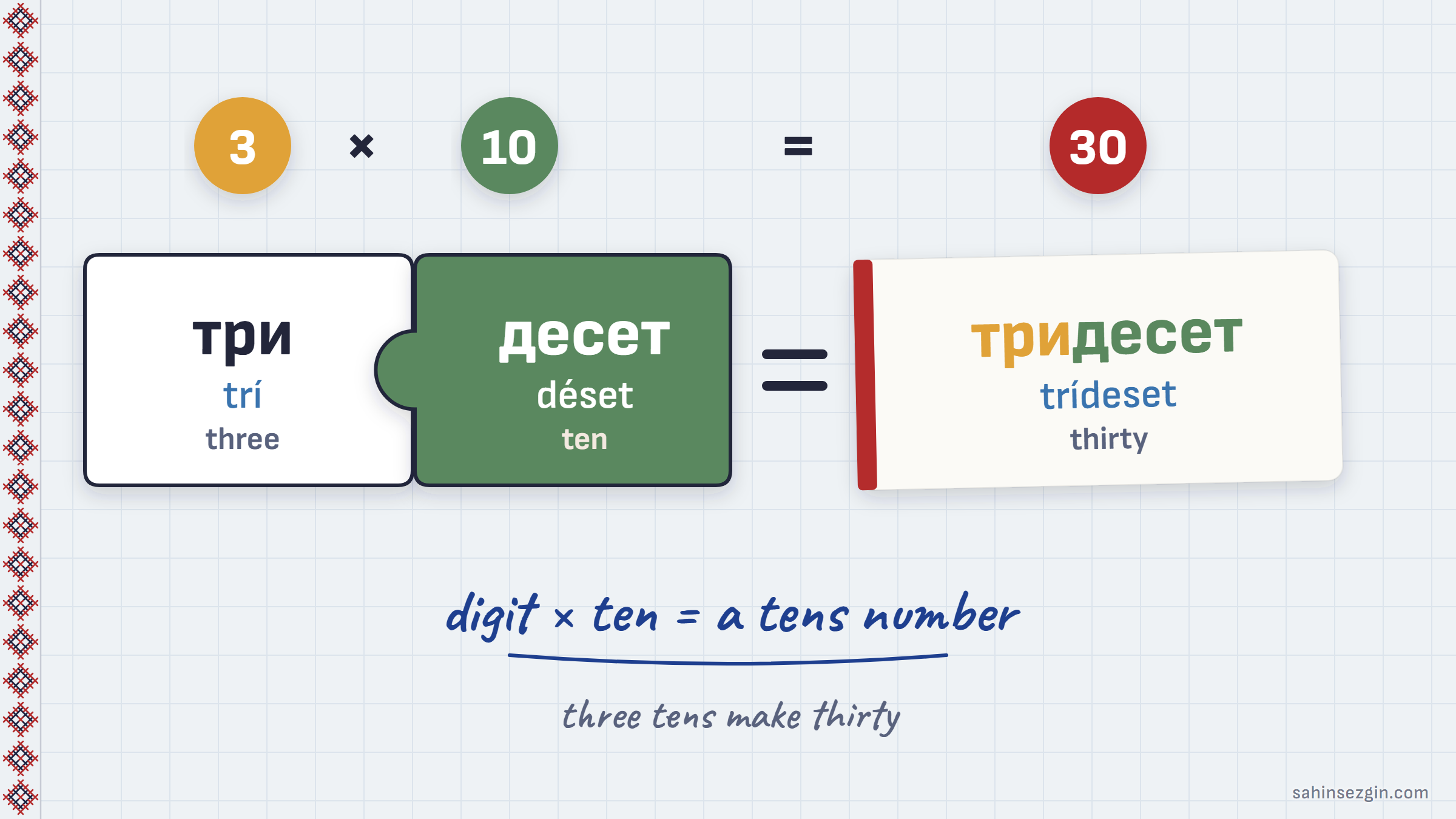
To count in Bulgarian up to 100, build each ten from a digit plus десет (déset): три (trí, three) with десет gives тридесет (trídeset, thirty). Twenty, thirty, forty and sixty also have short spoken forms. The first three tens stress the syllable before the ten; from fifty on the stress jumps to the last syllable. For the numbers in between you put и (i) between the ten and the unit. It means “and”, so 21 is “twenty and one”: ten first, unit second, never the nursery-rhyme order of “four and twenty”.
| Bulgarian (written / spoken) | Pronunciation | English |
|---|---|---|
| двадесет / двайсет | dvádeset / dváyset | 20 |
| тридесет / трийсет | trídeset / tríyset | 30 |
| четиридесет / четиресет | chetirídeset / chetíreset | 40 |
| петдесет | peddesét | 50 |
| шестдесет / шейсет | shezdesét / sheysét | 60 |
| седемдесет | sedemdesét | 70 |
| осемдесет | osemdesét | 80 |
| деветдесет | deveddesét | 90 |
| сто | stó | 100 |
In петдесет (peddesét, fifty) the т (t) turns into d before the д (d). Sixty and ninety also drift from their spelling, so trust the pronunciation column. With the tables above you can now say all Bulgarian numbers 1 to 100.
| Bulgarian | Pronunciation | English |
|---|---|---|
| двадесет и едно | dvádeset i ednó | 21 |
| двадесет и пет | dvádeset i pét | 25 |
| тридесет и три | trídeset i trí | 33 |
| петдесет и осем | peddesét i ósem | 58 |
| седемдесет и шест | sedemdesét i shést | 76 |
| деветдесет и девет | deveddesét i dévet | 99 |
PART 2 · HUNDREDS, THOUSANDS AND MORE
3. Bulgarian hundreds and thousands: from 200 to a million
Two hundred and three hundred are short and irregular. From four hundred to nine hundred you add стотин (stotin, hundred) to the digit; that part is unstressed. A thousand is a new word, хиляда (hilyáda), and from two thousand up you use the plural хиляди (hilyádi). Because хиляда is feminine, two thousand takes две (dvé), not два (dvá). Million is masculine: един милион (edín milión), два милиона (dvá milióna).
| Bulgarian | Pronunciation | English |
|---|---|---|
| двеста | dvésta | 200 |
| триста | trísta | 300 |
| четиристотин | chétiristotin | 400 |
| петстотин | pétstotin | 500 |
| шестстотин | shéststotin | 600 |
| седемстотин | sédemstotin | 700 |
| осемстотин | ósemstotin | 800 |
| деветстотин | dévetstotin | 900 |
| хиляда | hilyáda | 1000 |
| две хиляди | dvé hilyádi | 2000 |
| един милион | edín milión | 1 000 000 |
Step 1 · Split it: 347 is three hundred, forty, seven.
Step 2 · Say each part: триста (trísta), четиридесет (chetirídeset), седем (sédem).
Step 3 · Put и (i, and) before the last part: триста четиридесет и седем (trísta chetirídeset i sédem).
If only a ten or a unit follows, и (i) comes straight after the hundred: сто и пет (stó i pét) is 105, the British “a hundred and five”. A thousands group with two or more parts takes its own и: двадесет и пет хиляди (dvádeset i pét hilyádi, 25 000). In the number 2026, две хиляди двадесет и шест (dvé hilyádi dvádeset i shést), only the last group needs и.
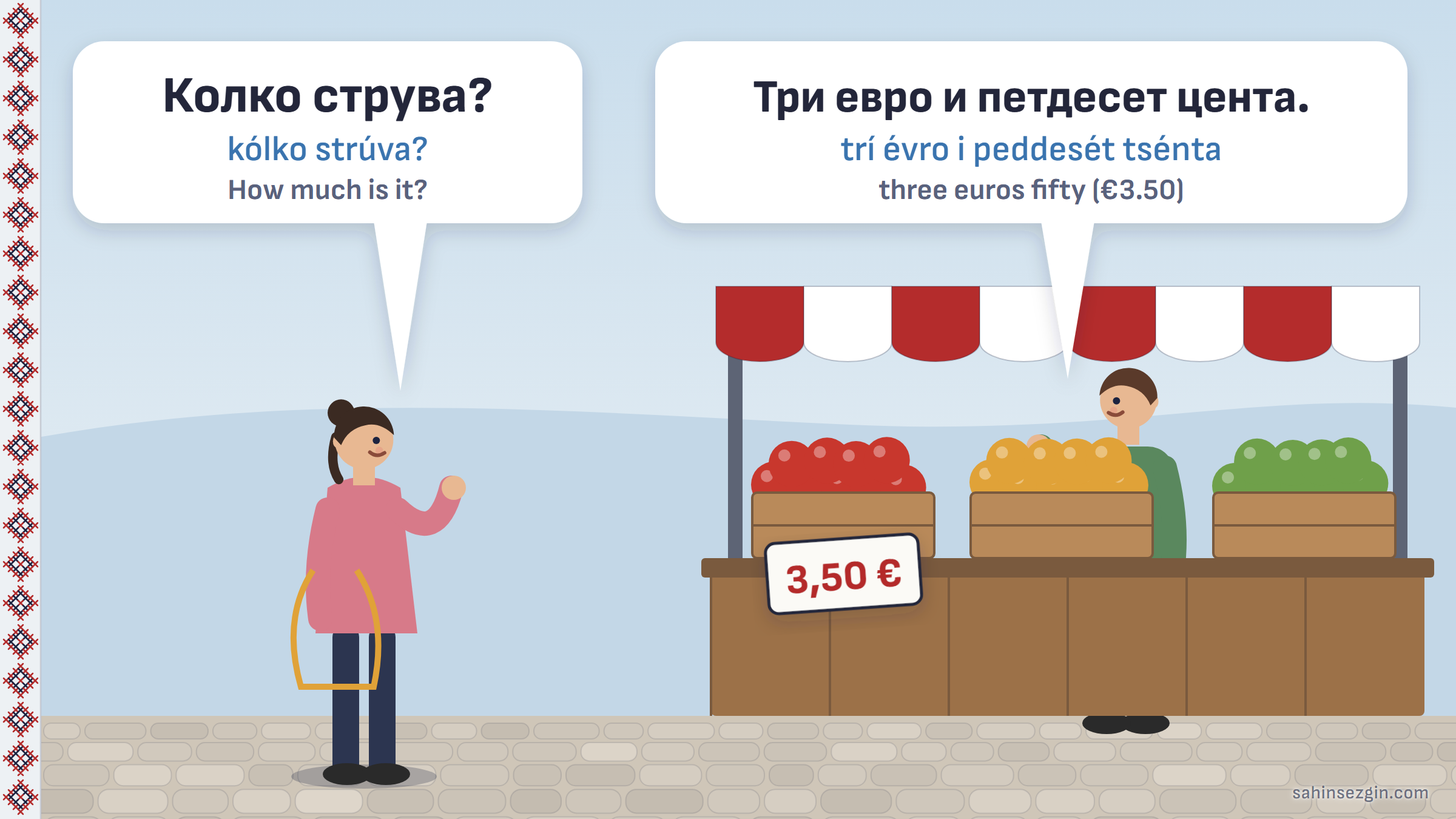
Bulgarians write 25 000 with a space and use a comma for decimals, so a tag reading 3,50 € means €3.50.
4. One and two in Bulgarian: два (dvá), две (dvé) and двама (dváma)
English nouns have no gender, so this part is new. Every Bulgarian noun is masculine, feminine or neuter, and 1 and 2 agree with it. Masculine nouns take един (edín, one) and два (dvá, two); feminine ones една (edná) and две (dvé); neuter ones едно (ednó) and again две. How to spot the gender is in Lesson 6: Bulgarian noun gender and plural. Below, стол (stól, chair) is masculine, маса (mása, table) feminine and кафе (kafé, coffee) neuter.
| Bulgarian | Pronunciation | English |
|---|---|---|
| един стол | edín stól | one chair |
| една маса | edná mása | one table |
| едно кафе | ednó kafé | one coffee |
| два стола | dvá stóla | two chairs |
| две маси | dvé mási | two tables |
| двама приятели | dváma priyáteli | two friends |
Masculine nouns that are not people take -а (a) or -я (ya) after a number: два стола (dvá stóla), два коня (dvá kónya, two horses). In compound numbers only the last part agrees with the noun, which is why 21 years is двайсет и една години (dváyset i edná godíni): година (godína, year) is feminine. When you count men, or a mixed group, the number itself changes: двама (dváma) two people, трима (tríma) three. Two women is still две жени (dvé zhení).
5. Bulgarian ordinal numbers: from first to tenth
The first four Bulgarian ordinal numbers are irregular: първи (pắrvi, first), втори (ftóri, second), трети (tréti, third) and четвърти (chetvắrti, fourth). You need them for floors and dates. From fifth on you add -и (i): пет (pét, five) becomes пети (péti, fifth). Two pairs bend the rule: in седми (sédmi, seventh) and осми (ósmi, eighth) the e drops out, and in девети (devéti, ninth) and десети (deséti, tenth) the stress moves to the second syllable. Ordinals change like adjectives: първи ден (pắrvi dén) first day, първа година (pắrva godína) first year. You will use them for dates in Lesson 3: days of the week in Bulgarian.
| Bulgarian | Pronunciation | English |
|---|---|---|
| първи | pắrvi | first |
| втори | ftóri | second |
| трети | tréti | third |
| четвърти | chetvắrti | fourth |
| пети | péti | fifth |
| шести | shésti | sixth |
| седми | sédmi | seventh |
| осми | ósmi | eighth |
| девети | devéti | ninth |
| десети | deséti | tenth |
PART 3 · EVERYDAY USE AND QUIZ
6. Saying your age and prices in Bulgarian
Bulgarians ask your age with На колко години си? (na kólko godíni si?), literally “at how many years are you?” Politely, си (si) becomes сте (ste). Since 1 January 2026 Bulgaria has used the euro, so prices are said in евро (évro), a word that never changes after a number. A cent is цент (tsént), and after a number it becomes цента (tsénta). Practise these lines out loud until they come without thinking.
| Bulgarian | Pronunciation | English |
|---|---|---|
| На колко години си? | na kólko godíni si? | How old are you? |
| На двайсет и една години съм. | na dváyset i edná godíni săm | I’m twenty-one. |
| Колко струва? | kólko strúva? | How much is it? |
| три евро и петдесет цента | trí évro i peddesét tsénta | €3.50 |
Asking the price at a market in Plovdiv
Alex has just moved to Plovdiv and stops at bay Petar’s fruit stall with Mila. Alex asks for two kilos, so the masculine килограм (kilográm, kilo) takes the counting ending -а (a). At the till you may also hear just три и петдесет (trí i peddesét), “three fifty”, with the euro left out. Notice how bay Petar gives the price: euros first, then и (i) and the cents, the same order as in English. More on money is in Lesson 8: Bulgaria currency.
| Bulgarian | Pronunciation | English |
|---|---|---|
| Alex: Добър ден! Колко струват ябълките? | dóbăr dén! kólko strúvat yábălkite? | Good day! How much are the apples? |
| Bay Petar: Три евро и петдесет цента килограмът. | trí évro i peddesét tsénta kilográmăt | Three euros fifty a kilo. |
| Alex: Два килограма, моля. | dvá kilográma, mólya | Two kilos, please. |
| Bay Petar: Седем евро. | sédem évro | Seven euros. |
Clock times: в два часа (v dvá chása) and 18:30
The word час (chás, hour) is masculine, so “at two” is в два часа (v dvá chása). For half past say и половина (i polovína), for quarter to без петнайсет (bez petnáyset). Timetables use the 24-hour clock: 18:30 is осемнайсет и трийсет (osemnáyset i tríyset), the hour and the minutes joined by и (i). Before a voiceless sound в (v) becomes f, which is why В колко часа? (f kólko chása?) starts with an f.
| Bulgarian | Pronunciation | English |
|---|---|---|
| Колко е часът? | kólko e chasắt? | What time is it? |
| Часът е три и половина. | chasắt e trí i polovína | It’s half past three. |
| Часът е осем без петнайсет. | chasắt e ósem bez petnáyset | It’s quarter to eight. |
| В седем часа. | f sédem chása | At seven o’clock. |
7. Quick quiz: test yourself with 10 questions
Ten questions, in the order of the lesson, with at least one from every part. Not sure? Open “Answer” for a short explanation. When you miss one, go back to its table and read that row aloud, then retry only your mistakes two days later.
-
Which number is четиридесет (chetirídeset)?
- 4
- 14
- 40
Answer
40: четири (chétiri, four) plus десет (déset, ten).
-
Someone says дванайсет (dvanáyset). Which number is it?
- 12
- 2
- 20
Answer
12, the spoken form of дванадесет (dvanádeset).
-
How do you say 74?
- четиридесет и седем (chetirídeset i sédem)
- седемдесет и четири (sedemdesét i chétiri)
- седемнадесет и четири (sedemnádeset i chétiri)
Answer
Ten first, then и (i) and the unit.
-
How do you say 230?
- две сто и тридесет (dvé stó i trídeset)
- двадесет и три (dvádeset i trí)
- двеста и тридесет (dvésta i trídeset)
Answer
200 is the single word двеста (dvésta), and и (i) follows it.
-
Which one means 2,000?
- две хиляди (dvé hilyádi)
- два хиляди (dvá hilyádi)
- две хиляда (dvé hilyáda)
Answer
Thousand is feminine and plural from two up.
-
жена (zhená, woman) is feminine. Which one means “two women”?
- два жени (dvá zhení)
- двама жени (dváma zhení)
- две жени (dvé zhení)
Answer
двама (dváma) counts only men or mixed groups.
-
стол (stól, chair) is masculine. Which one means “four chairs”?
- четири стол (chétiri stól)
- четири стола (chétiri stóla)
- четвърти стол (chetvắrti stól)
Answer
The noun takes -а (a) after a number; четвърти стол (chetvắrti stól) is “the fourth chair”.
-
Which word means “third”?
- три (trí)
- трийсет (tríyset)
- трети (tréti)
Answer
три (trí) is 3 and трийсет (tríyset) is 30.
-
You hear Часът е три и половина (chasắt e trí i polovína). What time is it?
- 13:00
- 3:30
- 3:15
Answer
и половина (i polovína) means “and a half”.
-
At the till you hear дванайсет евро и петдесет цента (dvanáyset évro i peddesét tsénta). How much do you pay?
- €2.50
- €12.50
- €20.50
Answer
дванайсет (dvanáyset) is 12, петдесет цента (peddesét tsénta) is 50 cents.
Frequently asked questions about Bulgarian numbers and counting
How do you count to 10 in Bulgarian?
едно (ednó), две (dvé), три (trí), четири (chétiri), пет (pét), шест (shést), седем (sédem), осем (ósem), девет (dévet), десет (déset). Zero is нула (núla).
How do you say 100 and 1000 in Bulgarian?
100 is сто (stó) and 1000 is хиляда (hilyáda). A million is милион (milión).
Are Bulgarian numbers similar to Russian?
Many are, since both are Slavic: три (trí, three) and сто (stó, hundred) match. Others differ, like хиляда (hilyáda, thousand). Bulgarian also has no case endings: where Russian changes the noun after a number, Bulgarian only adds the counting ending, as in два стола (dvá stóla, two chairs).
How do you say number in Bulgarian?
Число (chisló) means number, and a single digit is цифра (tsífra).
Audio: Lingua Libre (Wikimedia Commons), speaker Kiril kovachev, licensed under CC BY-SA 4.0; Lingua Libre (Wikimedia Commons), speaker Bogomilshopov, licensed under CC0. Recordings were converted to MP3.
Write a comment